
Do Sharks Follow Cruise Ships? The Truth Behind This Ocean Myth In 2026
Sharks and cruise ships are two awe-inspiring entities of the ocean. Do sharks follow cruise ships? It is a question that stirs both curiosity and fear among ocean enthusiasts and vacationers alike. The answer is that sharks do not routinely follow cruise ships. While sharks may occasionally appear near vessels under certain conditions, there is no scientific evidence suggesting that sharks follow cruise ships.
In this article, you will find fascinating science behind this ocean myth. Do sharks follow cruise ships, revealing the realities of shark behavior in relation to our massive vessels? Get ready to explore how your floating hotel might or might not attract these magnificent predators, and what it means for your next ocean getaway.
Explore More: Best Time To Go On A Cruise
Why Do People Think Sharks Follow Cruise Ships?
Many travelers have marveled at the sight of a cruise ship cutting through the azure waters, only to speculate: Do sharks follow cruise ships? This idea is just a whimsical notion. Sharks, naturally curious predators, are often drawn to the sounds and vibrations generated by large vessels, interpreting them as a signal that something interesting might be happening beneath the waves. Several factors contributed to this belief:
- Sharks were frequently spotted around fishing vessels.
- Food waste was sometimes dumped overboard.
- Injured fish caught by fishing crews attracted predators.
Do Sharks Follow Cruise Ships Because of Food?
Do sharks follow cruise ships because of food? It’s a fascinating question that has intrigued travelers and marine enthusiasts alike. While many believe these majestic predators are drawn by the scent of fish scraps thrown overboard, the reality is more complex. When cruise ships sail through the open ocean, they stir up currents and create a unique underwater environment, attracting smaller fish and, in turn, larger predators.
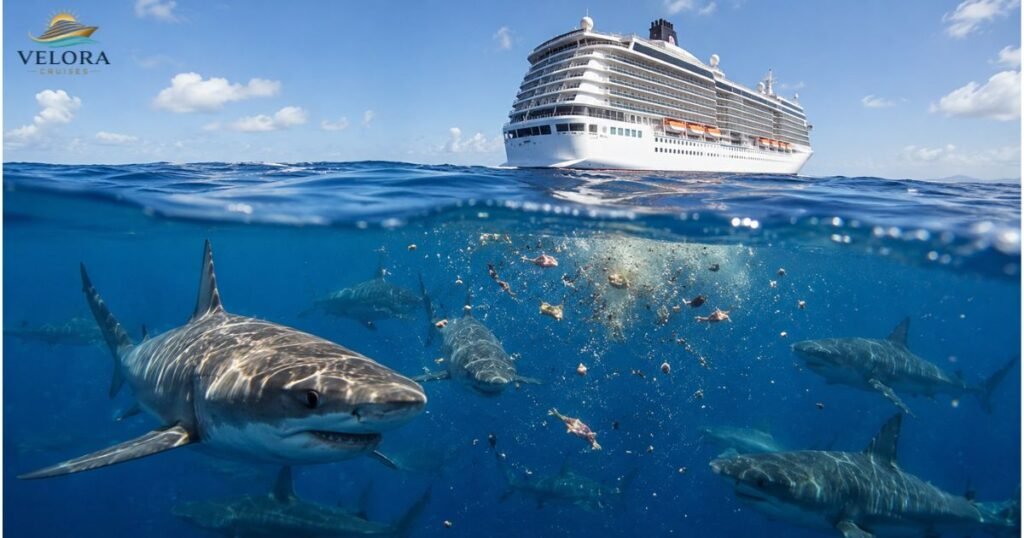
Sharks, having a sense of smell and keen instincts, might find themselves cruising alongside these cruise ships, not necessarily for a free meal, but for opportunistic feeding. But modern cruise ships have strict environmental regulations about waste disposal. Food scraps and garbage are disposed of in accordance with international maritime laws to reduce the creation of feeding opportunities for marine animals. So, when people question, do sharks follow cruise ships because of food? Marine biologists generally answer that cruise ships are not feeding sources for sharks.
Explore More: Top 10 Best Cruises for Seniors: A Complete Guide 2026
How Sharks Detect Their Surroundings
Sharks are the ultimate underwater detectives, armed with a suite of sophisticated tools to navigate their watery realm. This combination of sensing capabilities transforms the ocean into a vibrant tapestry of life, where each pulse and flicker is a story waiting to be discovered.
Sense of Smell
Sharks’ sense of smell detects tiny amounts of chemicals in the water to help them find injured animals or potential prey.
Hearing
Sharks listen to low-frequency sounds generated by struggling fish or marine mammals.
Lateral Line System
Sharks detect vibrations and movement in the water with this sensory organ.
Electroreception
Sharks detect electrical signals emitted by living creatures with special organs called ampullae of Lorenzini.
Effect of Cruise Ship Noise on Sharks
The effect of cruise ship noise on sharks is not just an ecological concern; it alters the very fabric of marine life interactions. Sharks, often misunderstood as fearsome predators, rely heavily on their acute sense of hearing to navigate and hunt. Modern cruise ships get power from large engines and propeller systems. These vessels generate:
- Engine noise
- Propeller vibrations
- Water turbulence
- Acoustic disturbances
This is one reason why the answer to do sharks follow cruise ships is generally no. The constant mechanical activity near large vessels makes them less attractive to marine wildlife.
See More: Carnival Best Cruises for Couples
Are Sharks Ever Seen Near Cruise Ships?
Are sharks ever seen near cruise ships? The answer is a resounding yes, but it’s a bit of a mixed bag. Cruises typically sail through deep, blue waters that can be home to species like the majestic whale shark or the swift hammerhead, yet sightings are often fleeting and quite rare. Interestingly, many cruise itineraries skirt around popular shark habitats, focusing instead on the picturesque coastlines that entice tourists.
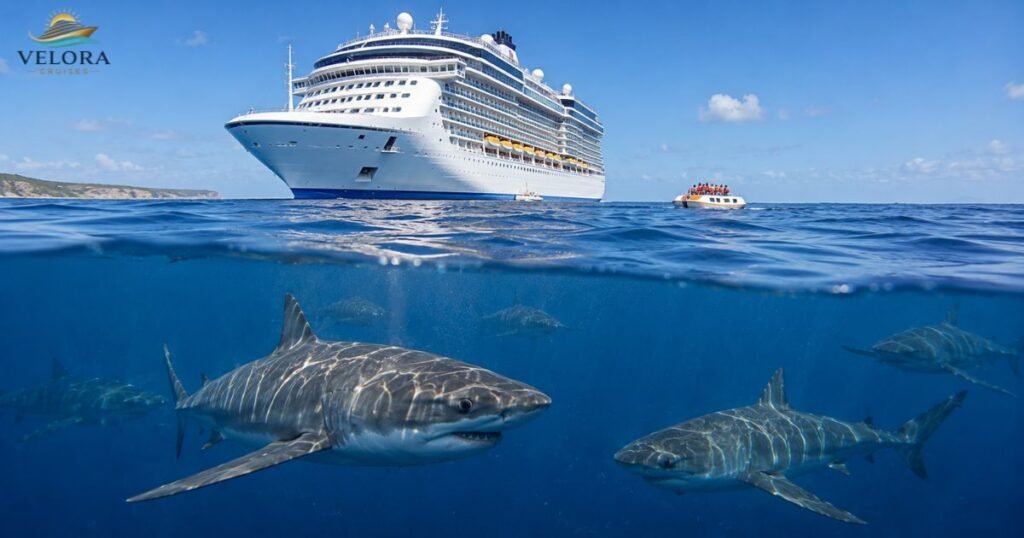
If you’re lucky enough to be near a feeding frenzy, you might catch a glimpse of these fascinating creatures, especially if your cruise takes you through areas like the Bahamas or the Caribbean, where nutrient-rich waters attract schools of fish and, consequently, sharks. But seeing a shark near a ship does not indicate it is following the cruise ship. There are several possible reasons:
- The ship passes through the shark’s living area.
- Sharks were feeding in that area before.
- Ocean currents indicate prey nearby.
- The shark is discovering its environment.
Shark Migration Pattern
Many shark species travel long distances during seasonal migrations. For example:
- Whale sharks migrate in search of plankton blooms.
- Great white sharks travel between feeding grounds.
- Hammerhead sharks move in response to water temperature changes.
When considering do sharks follow cruise ships, it’s important to remember that sharks are focused on survival, reproduction, and feeding opportunities rather than human vessels. Their migration routes existed long before modern shipping lanes were established.
Explore More: Cape Liberty Cruise Port Parking
Which Shark Species Are Seen Near Ships?
When exploring which shark species are most likely to be seen near ships, the drama of the ocean unfolds. One notable contender is the tiger shark, known for its curious nature and adaptability to various environments. Often scavenging near vessels, these sharks are drawn by the scent of fish and other organic materials that accumulate near boat activity. Their distinctive striped patterns make them a striking sight for those lucky enough to spot them. Certain shark species are more curious than others and may occasionally approach vessels. These include:
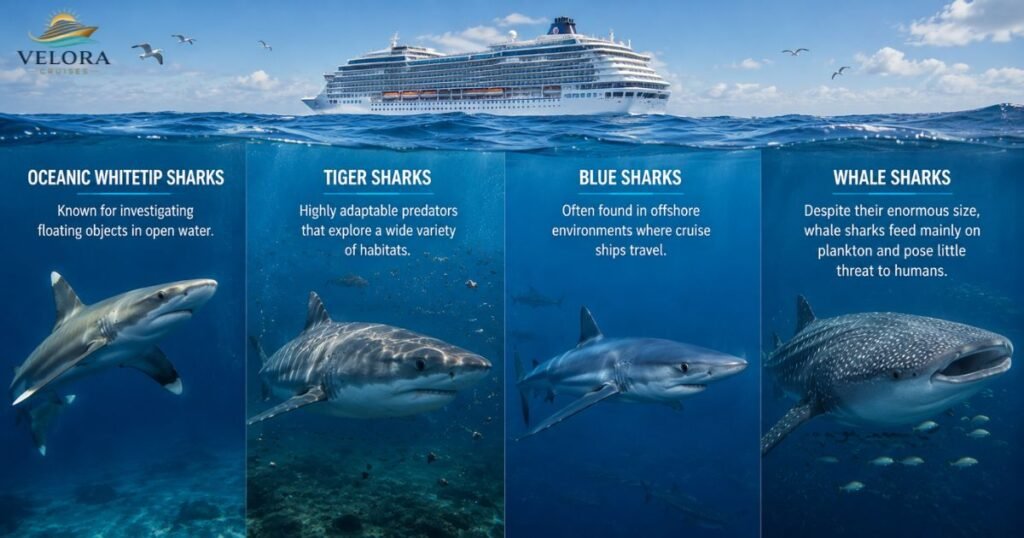
Oceanic Whitetip Sharks
Known for investigating floating objects in open water.
Tiger Sharks
Highly adaptable predators that explore a wide variety of habitats.
Blue Sharks
Often found in offshore environments where cruise ships travel.
Whale Sharks
Despite their enormous size, whale sharks feed mainly on plankton and pose little threat to humans.
Are Cruise Passengers at Risk From Sharks?
Are cruise passengers at risk from sharks? While the thought of encountering these majestic creatures can evoke fear, the reality is much less dramatic. Sharks tend to shy away from bustling human activities, often sensing vibrations and noise that signal danger to them. Cruise ships, with their vast volumes and constant movement, create an environment that is not conducive to shark encounters, making serious incidents extremely rare. Cruise passengers are generally safe because:
- Most remain on board the vessel.
- Swimming activities occur in supervised locations.
- Cruise operators monitor local conditions.
- Safety protocols are established for excursions.
The question do sharks follow cruise ships often arises from fear, but scientific evidence suggests there is little reason for concern.
Discover More: Carnival Legend Cabins to Avoid
Environmental Impact of Cruise Ships on Sharks
The environmental impact of cruise ships on sharks extends far beyond the aesthetic disruptions of our oceans. One significant concern is the introduction of pollutants from these vessels, which can compromise the delicate balance of marine ecosystems. Chemicals such as oil, sewage, and heavy metals released into the water can reduce the quality of habitats crucial for shark reproduction and feeding, pushing species nearer to extinction. Potential impacts include:
- Noise Pollution: Underwater noise may interfere with animal communication and navigation.
- Water Pollution: Improper waste management can affect marine habitats.
- Ship Strikes: Large vessels occasionally collide with marine wildlife.
- Climate Change Contributions: Shipping emissions contribute to broader environmental challenges that impact ocean ecosystems.
Tips for Safe Ocean Activities During a Cruise
When engaging in ocean activities during a cruise, staying informed is your best safety net. Always start by checking weather and water conditions, sunshine can quickly turn to storms. During your cruise, if you plan to do swimming, snorkeling, or diving excursions, follow these simple safety guidelines to remain safe. These safety precautions are for general ocean safety. It is not because sharks are following cruise ships.
- Swim in designated areas.
- Follow crew instructions.
- Do not enter the water at dawn or dusk.
- Do not feed marine wildlife.
- Avoid wearing highly reflective jewelry.
- Stay aware of local conditions
Explore More: 15 Things to Avoid on a Cruise Ship Lido Deck 2026
Conclusion: Do Sharks Follow Cruise Ships?
So, do sharks follow cruise ships? The evidence overwhelmingly suggests that they do not. The idea of sharks trailing cruise ships may spark curiosity and intrigue, but the truth is a bit more nuanced. These majestic creatures are drawn to specific types of activity and food sources. As travelers, it’s essential to appreciate these remarkable animals in their natural habitat, respecting their space and role in the ocean’s ecosystem. Observing sharks in their natural environment can be an awe-inspiring experience, further deepening our appreciation for marine life. The next time you’re on a cruise, keep your eyes peeled not just for the beautiful views but also for the fascinating marine life below.
FAQs
Do sharks really follow cruise ships?
No thesis is myth, sharks don’t follow cruise ships, they are attracted by the sounds of engines and the scent of food waste dumped overboard.
Is it safe to swim near cruise ships?
While it’s generally safe to swim, it’s best to stay vigilant and be aware of your surroundings, as sharks can be drawn to the area.
What attracts sharks to cruise ships?
Sharks are often attracted to the smells of fish scraps or waste bait, which can result in increased shark activity near a ship.
Are there specific types of sharks that follow cruise ships?
Yes, larger species like tiger sharks and hammerheads are commonly reported as being curious about cruise ships.
Can sharks recognize cruise ships?
Sharks can’t recognize cruise ships in the way humans do, but they are attracted to the sounds and smells associated with the vessels.
What’s the best way to enjoy ocean activities while on a cruise?
Enjoy your ocean activities by staying in designated swimming areas, following guidelines from the crew, and always being aware of your environment.