How Fast Do Cruise Ships Go In 2026: Best Guide To Explore
Speed is the name of the game when it comes to cruising, but just how fast do cruise ships go in 2026? With the rise of next-gen ships boasting cutting-edge technology, understanding how fast do cruise ships go can transform the way you experience ocean travel. Whether you’re a seasoned cruiser or planning your first voyage, knowing what to expect can significantly enhance your adventure.
Many first-time cruisers assume that bigger ships move slowly because of their size. While they are certainly not race boats, modern cruise ships can travel faster than most people expect. As the cruise industry evolves with innovative engineering and environmental considerations, these vessels are not only getting faster but also more efficient. In this article, you will get the answer to how fast do cruise ships go, including average cruising speeds, the fastest cruise ships ever built, and the factors that influence their performance at sea.
Explore More: Do Sharks Follow Cruise Ships?
Cruise Ship Speed Meaning
When considering cruise ship speed, it’s not just about numbers on a speedometer; it’s about the essence of the journey itself. Most cruise ships glide through the water at 18 to 22 knots, a sweet spot that lets travellers soak up breathtaking ocean vistas while enjoying onboard luxuries. This speed creates a balance between exploration and relaxation, allowing passengers to enjoy port activities without feeling rushed.
Ship speed is measured in a unit called a knot instead of miles per hour(mph). One knot is approximately 1.15 miles per hour (1.85 kilometers per hour). Cruise ships measure speed in knots, as it is the standard unit used in maritime navigation.
Explore More: Best Time To Go On A Cruise
10 Fastest Cruise Ships
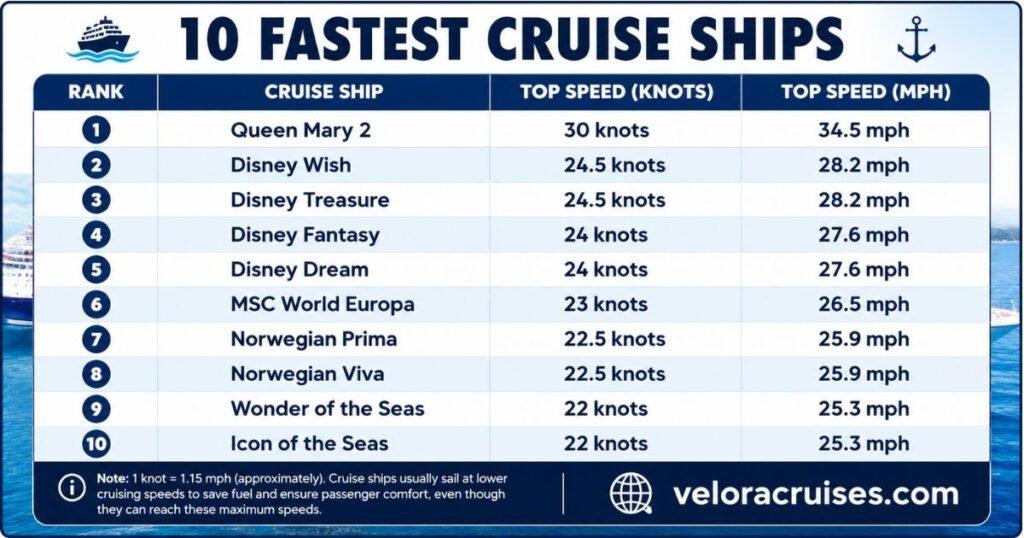
How Fast Do Cruise Ships Go on Average?
When it comes to cruising the open seas, many wonder, how fast do cruise ships go on average? Most modern cruise ships glide through the water at 15 to 22 knots, roughly translating to 17 to 25 miles per hour. Most major cruise lines operate within this range because it offers the ideal balance between passenger comfort, schedule reliability, and fuel efficiency. This speed strikes a perfect balance, allowing ample time for travelers to soak in the breathtaking ocean views, enjoy on-board amenities, and indulge in delicious cuisine.
Explore More: Top 10 Best Cruises for Seniors: A Complete Guide 2026
How Fast Do Cruise Ships Go During the Night?
Cruise ships typically sail at a speed of around 18 to 20 knots during the night, which translates to about 24 miles per hour. Passengers rarely notice changes because modern stabilizers reduce motion significantly. This impressive pace isn’t just for the thrill; it also allows vessels to cover vast distances while passengers enjoy the comfort of their cabins. As the waves gently lap against the hull, you might find yourself lulled into a deep sleep, unaware that the ship is gracefully gliding through the dark expanse of the sea.
How Fast Do Cruise Ships Go Vs Other Ships?
When considering the speed of cruise ships compared to other vessels, it’s fascinating to see how they operate in a league of their own. Generally, cruise ships glide through the waves at a comfortable pace of about 20-25 knots, which is roughly 23-29 mph. It’s all about the experience; after all, cruising is as much about the journey as it is about the destination. A useful way to understand how fast do cruise ships go is by comparing them with other types of vessels.
Cargo Ships
Most cargo ships travel between 12 and 18 knots. Cruise ships are generally faster because schedules maintaining is necessary for passengers.
Ferries
Ferries travel between 20 and 30 knots. Some high-speed ferries can exceed 40 knots.
Speedboats
Speedboats travel between 40 and 70 mph. They are much faster than cruise ships.
Naval Vessels
Military ships frequently exceed 30 knots and are designed for rapid deployment rather than passenger comfort.
See More: Carnival Best Cruises for Couples
Why Cruise Ships Don’t Travel at Maximum Speed
The reasons why cruise ships don’t travel at maximum speed are the undeniable allure of the destinations along the way. Slowing down allows passengers to savor the ocean views, soak in the onboard amenities, and enjoy enriching activities like swimming, dining, and entertainment. It turns the voyage into a holistic experience rather than a mere transit from point A to B. There are several reasons cruise ships avoid top speed:
- Lower fuel costs
- Reduced engine wear
- Better passenger comfort
- Improved environmental performance
- More efficient itinerary planning
Factors That Affect Cruise Ship Speed
Most intriguing factors that affect cruise ship speed are the design of the vessel itself. Sleek, hydrodynamic shapes allow for smoother navigation through the water, while heavy ships designed for stability in rough seas might sacrifice speed for comfort. Moreover, environmental conditions play a crucial role in how fast a ship can travel. Several things influence how fast do cruise ships go during any particular voyage.
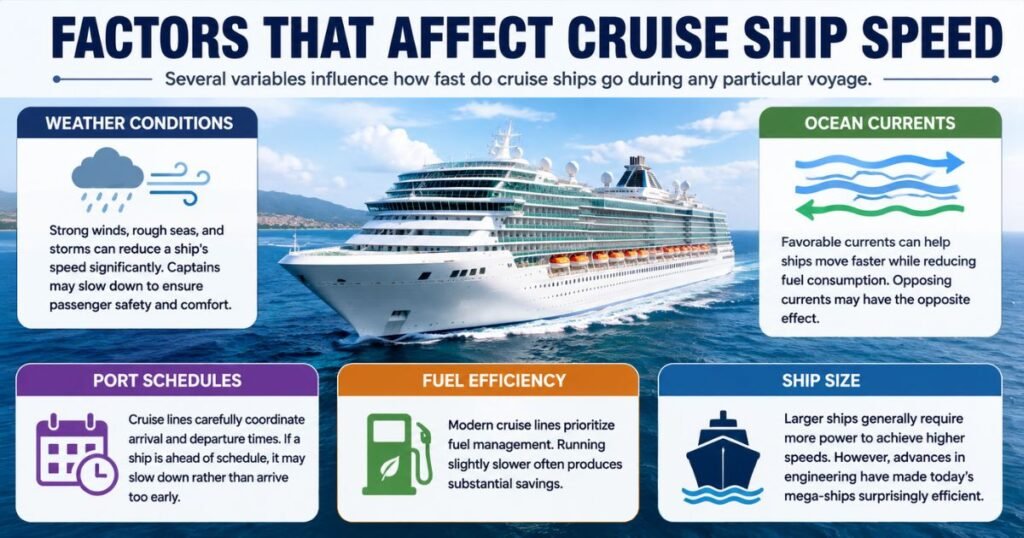
- Weather Conditions: Strong winds, rough seas, and storms can reduce a ship’s speed significantly. Captains may slow down to ensure passenger safety and comfort.
- Ocean Currents: Favorable currents can help ships move faster while reducing fuel consumption. Opposing currents may have the opposite effect.
- Port Schedules: Cruise lines carefully coordinate arrival and departure times. If a ship is ahead of schedule, it may slow down rather than arrive too early.
- Fuel Efficiency: Modern cruise lines prioritize fuel management. Running slightly slower often produces substantial savings.
- Ship Size: Larger ships generally require more power to achieve higher speeds. However, advances in engineering have made today’s mega-ships surprisingly efficient.
Explore More: Cape Liberty Cruise Port Parking
The Future of Cruise Ship Speeds
As technology moves forward, the future of cruise ship speeds promises a thrilling evolution in maritime travel. No longer confined to the leisurely pace of traditional vessels, innovative designs and advanced propulsion systems are revolutionizing how we experience the open sea. As the horizon expands, so does the potential for tailored itineraries, allowing discerning travelers to dive deeper into exotic locales without sacrificing comfort. The future is not just about speed; instead, cruise lines are investing in:
- Cleaner fuels
- Energy-efficient propulsion
- Advanced navigation systems
- Sustainable technologies
- Reduced emissions
Discover More: Carnival Legend Cabins to Avoid
Final Thoughts
The horizon of cruise ship speeds promises to revolutionize the way we experience the world from the deck of a ship. Faster journeys mean not just reduced travel time, but richer itineraries that allow us to savor more destinations and engage with them more deeply. Understanding how fast do cruise ships go helps travelers appreciate the engineering behind modern cruising. As cruise lines invest in cutting-edge propulsion systems and sustainable practices, we find ourselves on the brink of an exciting evolution in maritime travel. Yet, as we welcome these rapid advancements, let’s also advocate for responsible cruising that respects the oceans we explore.
FAQs
How fast do cruise ships go?
Most cruise ships cruise comfortably between 18 and 24 knots, which is about 21 and 28 miles per hour.
Are some cruise ships faster than others?
Yes! Larger, modern vessels might have higher cruising speeds, while older or smaller ships generally travel more slowly.
What factors influence a cruise ship’s speed?
Weather conditions, sea currents, and the ship’s design and size play significant roles in determining how fast a cruise ship can go.
Do cruise ships always travel at top speed?
Not at all! Ships often operate at a more leisurely pace to enhance the onboard experience and save fuel.
Can cruise ships adjust their speed while at sea?
Absolutely! Captains can modify speed in response to weather conditions or itinerary changes, ensuring a safe and enjoyable journey.
Are there any rules about cruise ship speed in certain areas?
Yes! Many ports and protected areas have speed limits to safeguard marine life and local communities.